
EN / ES
The Return of the Contemporary: The Latin American Novel in the End Times
In The Return of the Contemporary, Nicolás Campisi combines the fields of post-dictatorship studies and environmental humanities to analyze Latin American cultural production in the neoliberal age. Each chapter pairs two authors from different parts of Latin America and the Caribbean who create a common vocabulary in which to frame the various crises of the region’s present and recent past, such as climate change, forced migration, the collapse of state institutions, and the afterlives of slavery. By situating his argument at the intersection of ecocritical and environmental humanities, affect studies, and the politics of memory and postmemory, Campisi presents new comparative methods to show how Latin America's neoliberal crisis prompted significant changes in how the novel as a form imagines a different future.
Find out more here.
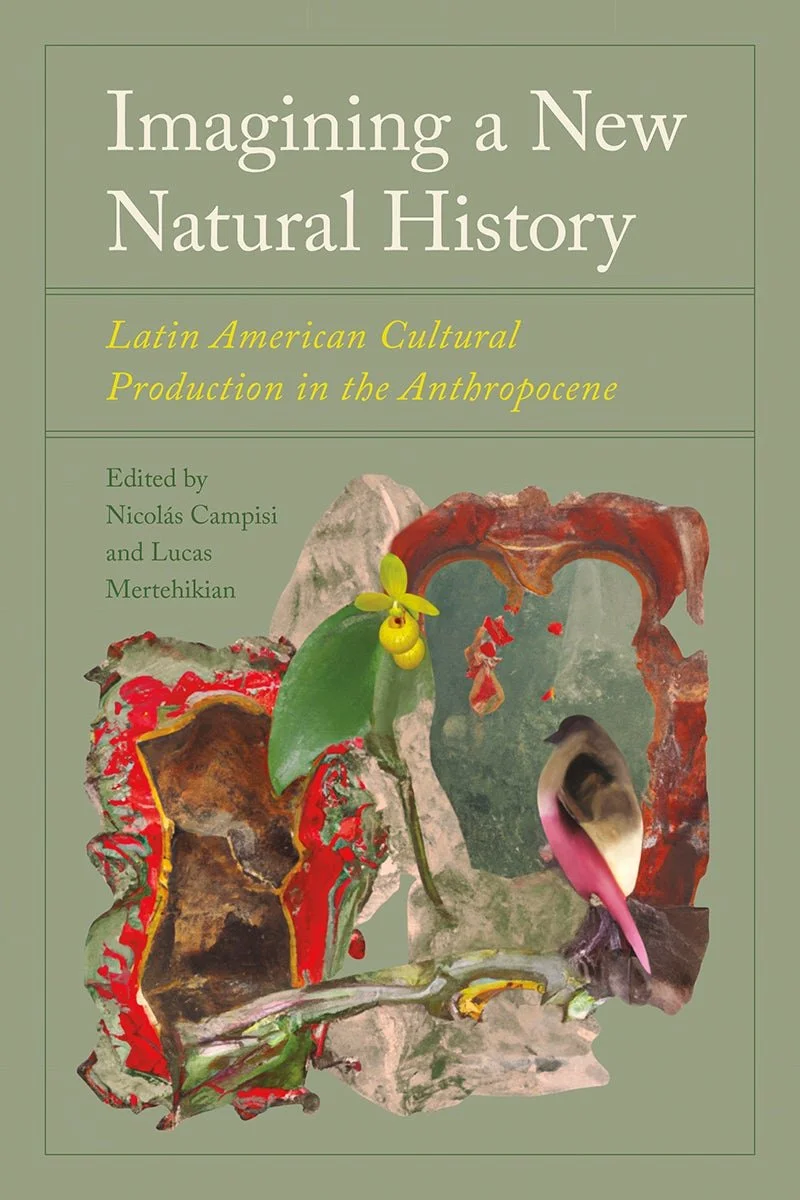
Imagining a New Natural History: Latin American Cultural Production in the Anthropocene
How writers, artists, and curators are taking creative new approaches to the discipline of natural history
Offering a fresh perspective on the Latin American climate crisis through the lens of natural history and its institutions, Imagining a New Natural History presents essays that analyze how books, artworks, and contemporary museum practices reconceive approaches to the discipline that cast humans and nature as separate entities. The creative works examined in this volume feature real and fictional archaeologists, museum curators, botanists, and taxidermists and explore subjects such as the catalog, the cabinet of curiosities, and the exhibition.
The contributors to this volume include leading scholars within Latin American studies and the environmental humanities, and the materials they study span diverse media, geographies, historical periods, and linguistic traditions, including Indigenous and Latinx cultural productions. They show how Latin American writers, artists, and critics provide a way of reckoning with the realities of climate change and the Anthropocene, as well as with the conceptual and aesthetic challenges that such realities pose to them. Through the perspectives of these artistic and literary practices, the natural history collections of anthropological museums, herbaria, and laboratories become explorations into the current climate predicament.
Contributors: Gabriel Giorgi | Gisela Heffes | Nicolás Campisi | Antonio Gómez | Carlos Fonseca | Florencia Garramuño | Ignacio Veraguas Caripan | Valeria Meiller | Luciana Martins | Jerónimo Duarte-Riascos | Ignacio Pastén López | Florencia Malbrán | Joanna Page | Lucas Mertehikian | Matylda Figlerowicz | Nathaniel Wolfson | Emily Hind
Find out more here.